How to Prune Peach Trees for Bigger, Easier-to-Harvest Fruit in Your Garden
- Proper pruning at the right time keeps peach trees manageable, improves fruit yield, and prevents damage.
- Prune in winter after extreme cold passes, focusing on dead, damaged, or diseased branches.
- Avoid pruning in wet weather, prune annually to minimize large cuts, and thin fruit in summer to prevent branch breakage.
Healthy peach trees deliver an abundance of sweet, dessert-ready fruit at harvest time, but require proper pruning methods to do so. Whether you’re nurturing just a few trees or managing a vast orchard, making the right pruning cuts at the right times benefits your yield and protects your trees. In addition, once peaches are ready to be picked, proper pruning simplifies the harvesting process.
For optimal results, follow our guide to mastering season-by-season peach tree pruning
Peach Tree Pruning Goals
- Easier harvesting. When allowed to grow freely, regular-size peach trees reach lofty heights, producing lots of woody growth and fewer fruits. Well-timed pruning can keep your trees at a manageable height (7 to 8 feet tall) for easier harvesting from the ground. Pruning also thins nonproductive stems, allowing light to reach the interior of the tree and ripen the fruit.
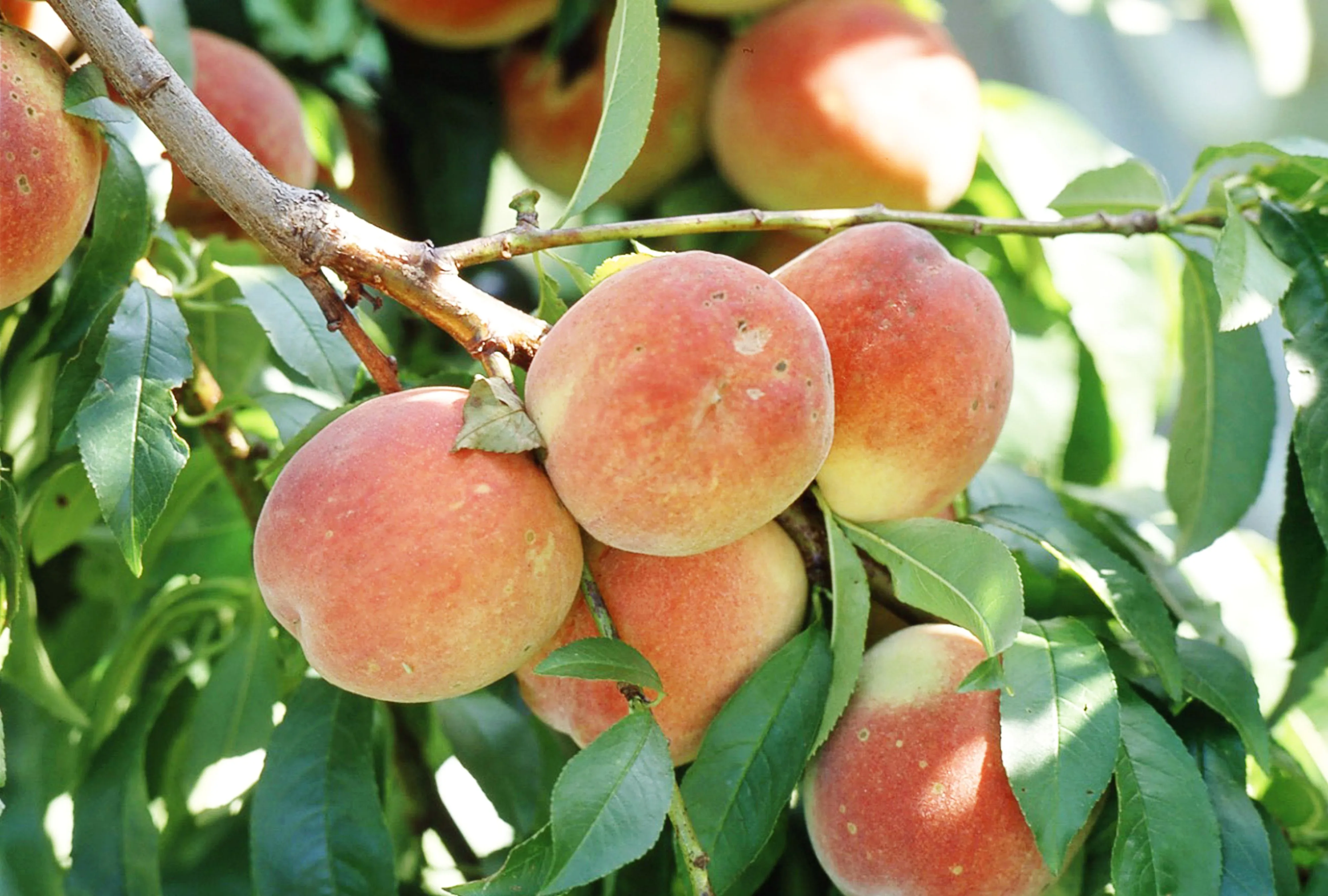
- Minimizing damage.Peach trees often produce so much fruit that branches break under the weight of ripening peaches. Thinning fruit in early summer is a common practice to prevent tree damage later in the season and produces larger fruit at harvest time.
Pruning at Planting Time
A well-branched peach tree that supports developing fruit will have three or four main branches extending from the trunk. These main branches, called scaffold branches, form the structure of the tree. The best scaffold branches connect to the trunk at about a 45- to 60-degree angle. Scaffold branches connected at an angle less than 45 degrees are often too weak to support a heavy fruit load.
Structural pruning in the first few years of a tree’s life is crucial for establishing proper form. This is best done in early spring (which also happens to be the best time to plant young trees). To train a new peach tree sapling, select three or four strong, evenly spaced branches to serve as your tree’s scaffold branches. If your tree has more than four scaffold branches, prune away any competing growth that extends from the main trunk.
Related
If a scaffold branch is attached at a narrow angle (less than 45 degrees), look for a nearby branch with a wider angle and train it to eventually become a scaffold branch. Remove the weaker scaffold branch with sharp pruning shears or loppers by making a cut just outside the raised ridge of bark where the branch attaches to the trunk. This type of cut, referred to as collar cut, promotes faster healing and reduces the risk of infection.
Winter: Prune for Structure
Winter is a key time to prune peach trees because the leafless branches make it easier to assess the tree’s structure. The right timing is important because trees pruned in midwinter and then exposed to extreme cold are easily damaged and may even die. Wait to prune your peach trees until the threat of intense cold temperatures has passed. It is usually safe to prune peach trees about a month before the last average spring frost date in your area.
- Begin winter pruning by removing all dead, damaged, and diseased branches.
- Next, clip away any vigorous, upright shoots (called water sprouts), which do not produce fruit.
- Identify the scaffold branches and remove any shoots emerging from the main trunk that are not scaffolds. If needed, reduce the length of the scaffold branches by cutting them back to an outward-facing bud. The length of the scaffold branches determines the overall size of the tree. So, don’t hesitate to cut scaffolds back to create a tree that’s a manageable size for harvesting.
- Finally, prune shoots along each scaffold branch. Aim for a shoot about every 12 inches along a scaffold branch. The shoots that remain after pruning will produce fruit the following summer.
To avoid introducing plant diseases, sterilize pruning tools with rubbing alcohol before you begin pruning your peach tree. Clean the pruners again before pruning another tree.
Spring: Prune Dead or Damaged Wood
Peaches grow on the “fruiting wood” produced the previous growing season, so prune minimally in the spring. Removing live wood in spring can potentially reduce fruit production. Instead, the springtime pruning goal is to remove only dead, damaged, or diseased branches. It will be easy to see which branches were killed in winter about three weeks after leaves emerge on the trees. Remove these leafless branches to let more light into the tree’s interior.
Summer: Prune to Thin Fruit
At the height of summer, even the branches of a healthy peach tree can break under the weight of a heavy fruit load. Plus, an overladen peach tree will produce smaller fruit. To prevent both problems, thin the developing fruit about four weeks after the peach tree blooms.
Remove excess fruit so there is just one peach about every 6 inches along a branch. Pluck the small peaches off the branch by grasping the fruit stem firmly near the branch and twisting it off with a quick motion. Thinning peaches may feel like a tedious job, but it’s worth the effort. The fruit that remains on the tree will grow larger, plumper, and more colorful and flavorful than fruit from a tree that is not thinned.
Store fresh, unripe peaches at room temperature or in a paper bag if you want to speed up the ripening process. Keep ripe peaches in the refrigerator (up to five days) to slow ripening. Do not store fresh peaches in a plastic bag as the lack of air circulation may cause them to spoil faster.
Tips for Peach Tree Disease Prevention
Peach trees are prone to several pests and diseases. Some problems are the result of poor pruning practices. To prevent diseases, follow these practices:
- Don’t prune during wet weather. Prune peach trees on sunny days so that pruning wounds dry quickly. This helps minimize the risk of fungal disease.
- Prune regularly. Annual pruning results in several small pruning cuts that heal over quickly, sealing off the wound from pathogens. Pruning every other year (or less frequently) means larger cuts as you remove large, overgrown branches. The larger the pruning wound, the longer it takes to heal (and the greater the chance of infection).
- Don’t leave stubs. Prune branches and limbs back to the main stem. Don’t leave short branch stubs behind. The wood in a branch stub won’t heal as effectively as the wood right next to a main stem.
Frequently Asked Questions
- What’s the best tool to use to prune a peach tree?
The best tool for pruning a peach tree depends on the size of the branches and the goal is to make a clean cut. For early pruning and thin branches, sharp hand pruners should do the trick. For branches that are 1 inch thick, loppers are more suitable. For thick branches (3 inches or more), use a pruning saw. Keep all cutting tools well-honed and sanitized for quick, clean cuts.
- How long does it take before a peach tree bears fruit?
With proper care and maintenance, it takes about 2 to 4 years for a peach tree to start producing fruit.
- Do I need to plant multiple peach trees to grow fruit?
No. Most peach trees are self-pollinating, which means you only need one tree to produce fruit. However, planting your peach tree alongside another variety can improve the quality and yield of your fruit.
- <span>Gardening</span>
- <span>Edible Gardening</span>
- <span>Growing Fruit</span>