6 Beautiful Ficus Plants Giving Fiddle Leaf Figs Some Serious Competition
For more than a decade, fiddle leaf figs (Ficus lyrata) have dominated Instagram feeds, design blogs, and garden center aisles. They’re big and beautiful, but also famously fussy and prone to dropping their leaves if conditions aren’t quite to their liking. Instead, perhaps it’s time to try a ficus family member that offers just as much style with far less drama. Here are a few types of ficus that deserve a place in your houseplant collection.
<strong>Justin Hancock</strong> is a horticulturist and plant expert with Costa Farms, one of the world’s largest plant nurseries.
Best Types of Ficus Houseplants
“Fiddle leaf figs took all the air out of the room for pretty much all the other ficus varieties,” says Justin Hancock, a horticulturist and plant expert at Costa Farms. “But now that it’s a little bit overdone, people are re‑exploring the Ficus genus and embracing some of the other good varieties.” He suggests the following underrated types of ficus that can be every bit as gorgeous as fiddle leaf figs, but not as picky about growing conditions.
1. Rubber Tree
If the fiddle leaf fig is the moody influencer of the plant world, the rubber tree (Ficus elastica) is like an unfussy roommate: reliable and easy-going. They were houseplant staples in the 1970s for a reason—and they’re back in a big way, Hancock says. “My go‑to is the Ficus elastica group, commonly called rubber tree,” Hancock declares. “It’s an oldie but goodie.”
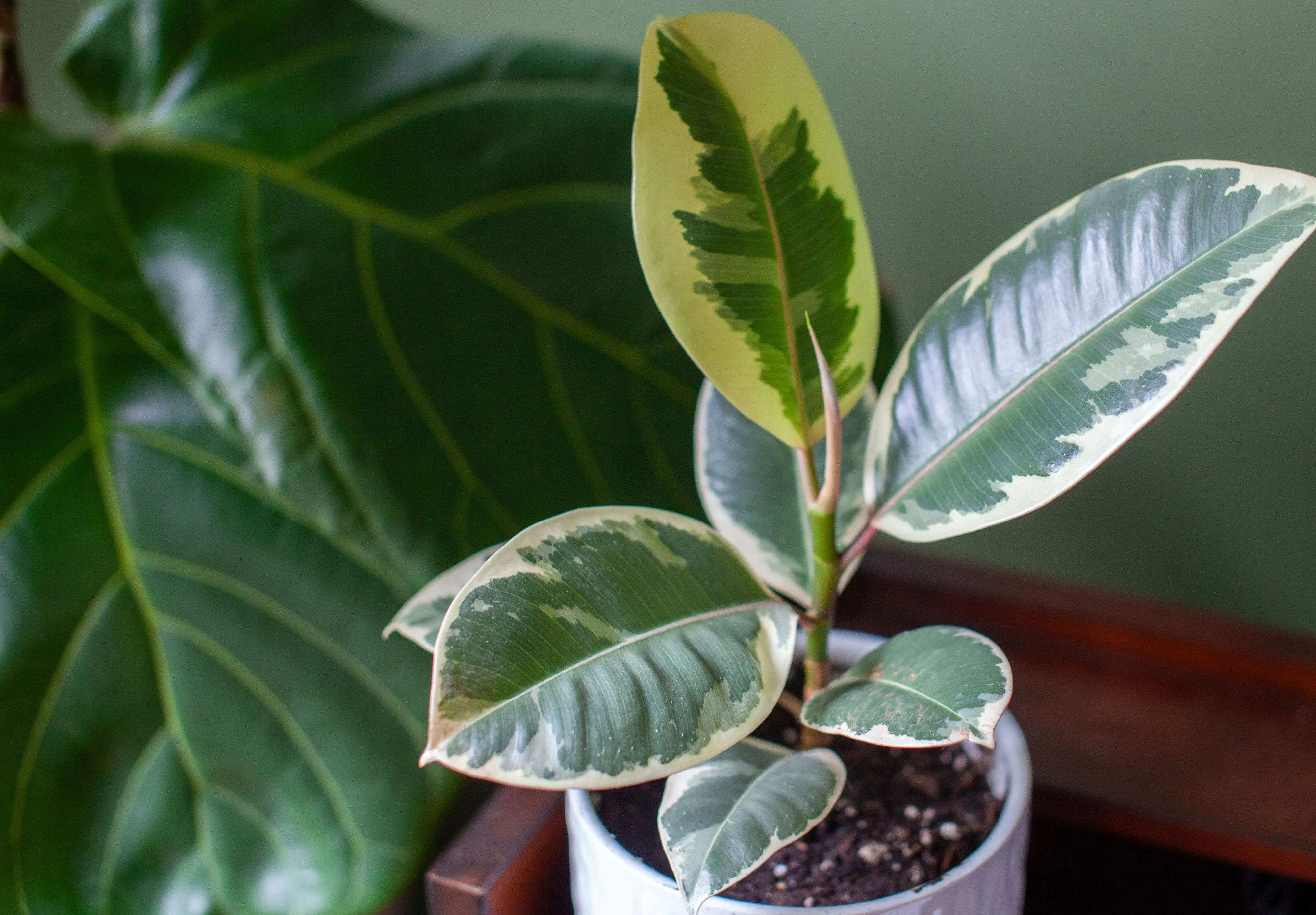
According to Hancock, rubber trees are more forgiving of low light than fiddle leaf figs, and their thick, substantial leaves don’t drop as easily when the plant is stressed. Rubber trees come in a range of beautiful colors and variegations. Hancock’s “all-time favorite” is ‘Tineke’, which has creamy-white variegation on the edges of its green leaves. For fans of pink foliage, ‘Ruby’ has pink and cream variegation.
2. Narrow-Leaf Fig
Narrow-leaf fig (Ficus maclellandii ‘Alii’) is another one of Hancock’s favorite types of ficus because it has the tree-like drama of a fiddle leaf without the neediness. “It has that thicker leaf, so it’s not as likely to shatter (drop leaves) when it’s stressed,” he says. “And the texture is fun. It’s a very long, narrow leaf, rather than a broad leaf.” This is why it’s also called banana leaf fig or long leaf fig.
‘Alii’ has an upright habit, meaning it reads like a potted tree in a room, but it has a softer, more flowing silhouette than a fiddle leaf.
3. Ficus Audrey
Ficus benghalensis ‘Audrey’ has quietly become a designer favorite. This elegant indoor tree features a white trunk and oval-shaped leaves with creamy-colored veins and velvety undersides.
‘Audrey’ has a muted, sophisticated look that gives that sculptural, indoor-tree presence, much like a fiddle leaf fig, but with somewhat easier care. Indoors, it grows about 10 feet tall and 2 or 3 feet wide.
Related
4. Dwarf Fiddle Leaf Fig
If you love the look of a fiddle leaf but not the size, meet ‘Bambino’ (Ficus lyrata ‘Bambino’). The plant is a genetic dwarf, so it stays less than half the size of the species Ficus lyrata, Hancock says, growing to just 3 or 4 feet tall.
‘Bambino’ is often sold in 6-inch pots, making it perfect for windowsills and small spaces. It’s easier to give ‘Bambino’ bright light because it can sit closer to your brightest window. You get the iconic fiddle-leaf shape in a more manageable package, and you won’t need a huge, sunlit room to accommodate it.
5. Ficus ‘Green Island’
This one is often sold as a bonsai, but it can be grown as a straightforward, compact houseplant. ‘Green Island’ (Ficus microcarpa ‘Green Island’) is a good ficus for beginners who want a tidy, polished potted plant that will stay around 3 feet tall.
‘Green Island’ has small, thick, waxy leaves and a sculptural, tree-like shape without the towering height. That thick, waxy foliage means it’s sturdier and less prone to dramatic leaf drop than thinner‑leaved types of ficus.
6. Creeping Fig
If you want a vine instead of a tree, creeping fig (Ficus pumila) is for you. “We grow a ton of it as houseplants, largely in hanging baskets,” Hancock says. Creeping fig looks gorgeous either as a trailing plant or trained to grow upwards on a small trellis. Its tiny, papery-thin, delicate leaves create a lush, textural cascade.
Creeping fig is not the easiest ficus to care for. “It is far thirstier and far less drought-tolerant than the shrub and tree ficus varieties because the leaves are small and thin,” Hancock says. If you’re willing to water a bit more often, creeping fig gives you a completely different way to enjoy the ficus genus.
- <span>Gardening</span>
- <span>Houseplants</span>
- <span>Choosing Houseplants</span>